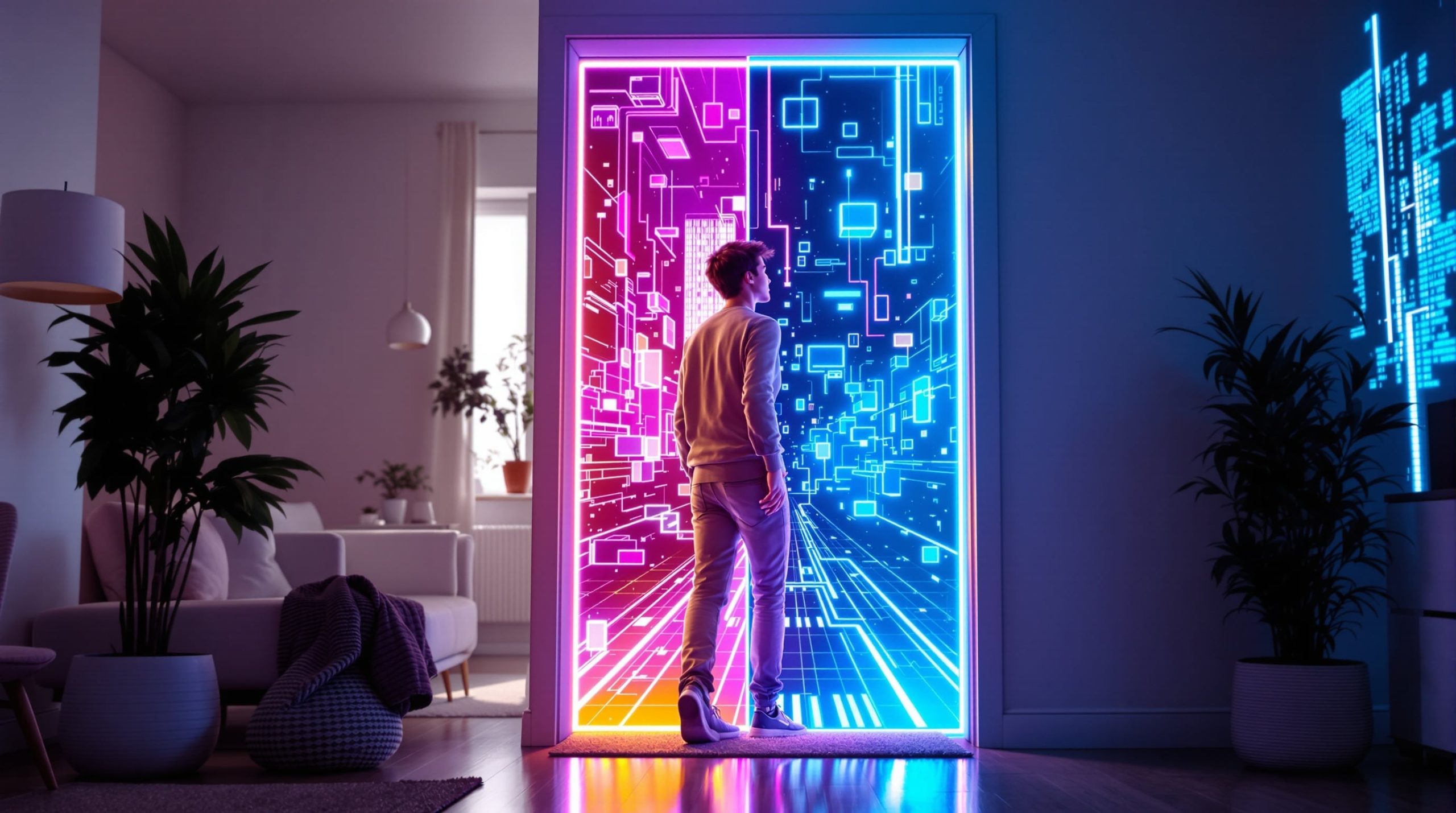


Тechnology and mental health
We live in an age where the first thing we do after waking up is reach for our phone. The last thing before sleep — scrolling through a screen. Between those two moments, the average person spends six to eight hours a day interacting with digital devices. This is not just a statistic. It is a description of the life most of us lead without ever stopping to ask: what is this doing to my mind?
In 2023, the World Health Organization declared a global mental health crisis. Rates of anxiety, depression, and digital burnout are rising exponentially — and not just among adults. Ten-year-old children are showing symptoms once reserved for overworked corporate executives. Research from the American Psychological Association shows that 48% of people who spend more than six hours a day on screens reported significant anxiety symptoms. A coincidence? I don’t think so.
But let’s be honest from the start — this is not an article that demonizes technology. I am someone who uses technology every day, who believes in its transformative power, who has found community, knowledge, and even forms of healing through digital tools. This is an article about awareness. About understanding how the digital world affects our minds, and how we can choose a different relationship with it. Because technology is not the problem — unconscious use is.
What You Will Learn in This Article
Over the next twenty minutes of reading, we will journey together through the complex and profound topic of the relationship between technology and mental health. Here is what awaits you:
- How technology affects mental health — an overview of scientific evidence and mechanisms
- Social media and anxiety — comparison culture, FOMO syndrome, and the spiral of dissatisfaction
- Digital addiction — dopamine cycles, compulsive behavior, and neuroplasticity
- Attention fragmentation — how technology destroys our ability to focus
- Sleep disruption — blue light, stimulation, and restless minds
- Information overload — mental exhaustion in the age of infinite data
- Cyberbullying — digital violence and its consequences on the psyche
- The loneliness paradox — why we are lonelier the more connected we become
- Depression and social media — what the research actually shows
- The positive side — technology as a mental health tool
- Apps, online therapy, digital communities — concrete resources
- Signs of digital burnout and how to recognize them
- Digital detox strategies — practical steps for change
- Healthy boundaries with technology and mindful use
- A personal transformation story — my journey from digital addict to mindful user
- The future of mental health and technology
This is the article I wished I had read five years ago, when I first felt that my phone was controlling me instead of the other way around.

💰 New income method is gaining attention
Discover how people are leveraging this system to generate consistent online earnings.
Explore now →How Technology Affects Mental Health — An Overview
To understand the impact of technology on the mind, we must first grasp a fundamental concept: our brains did not evolve for a digital environment. The human brain developed over hundreds of thousands of years in a natural environment where stimuli were limited, predictable, and physical. Today, that same brain receives more information in a single day than the average person in the 15th century received in an entire lifetime.
A study published in the Journal of Behavioral Addictions in 2022 showed that excessive smartphone use leads to structural changes in the brain — a reduction of gray matter in the prefrontal cortex, the region responsible for decision-making, impulse control, and emotional regulation. In other words, technology is literally reshaping our brains, and not always for the better.
The key mechanisms through which technology affects mental health include: constant stimulation that prevents the brain from resting, dopamine dysregulation that makes us addicted to digital rewards, social comparison that undermines self-confidence, and information overload that drains our cognitive resources. Each of these mechanisms deserves a closer examination.
Social Media and Anxiety — Comparison Culture and FOMO
Social media platforms are designed to keep us hooked. This is not a conspiracy theory — it is a business model. Former designers at Instagram, Facebook, and TikTok have openly spoken about how algorithms were created to exploit our psychological vulnerabilities. Tristan Harris, a former design ethicist at Google, called smartphones “slot machines in our pockets.”

Comparison culture is perhaps the most destructive aspect of social media. When you scroll through Instagram, you do not see reality — you see a curated, filtered portrayal of other people’s lives. A 2018 study from the University of Pennsylvania proved a direct correlation: the more time spent on social media, the greater the feelings of loneliness and depression. Limiting use to 30 minutes a day significantly reduces symptoms in just three weeks.
FOMO — Fear Of Missing Out — is not just a trendy buzzword. It is a real psychological phenomenon that activates the amygdala, the brain’s fear center. When you see your friends having fun without you, or a colleague advancing faster, your brain registers it as a threat to your social status. The result? Cortisol rises, anxiety intensifies, and you compulsively check your phone to “stay in the loop.” Research published in Computers in Human Behavior showed that 69% of millennials and 75% of Gen Z regularly experience FOMO.
I personally know what that cycle looks like. There were periods when I would wake up and my first thought was: “What did I miss?” Before I was even present in my own morning, I was already mentally living in other people’s lives. It is a form of mental invasion that we allow ourselves to engage in.
Digital Addiction — Dopamine Cycles and Compulsive Behavior
Every time you receive a like, a comment, or a notification, your brain releases dopamine — the neurotransmitter of pleasure. The problem lies in the cycle: dopamine creates a desire to repeat the experience, which drives you to check your phone again, which reinforces the habit. This is the identical mechanism behind gambling addiction.


💰 New income method is gaining attention
Discover how people are leveraging this system to generate consistent online earnings.
Explore now →Dr. Anna Lembke, a professor of psychiatry at Stanford and author of “Dopamine Nation,” explains that we live in an age of “dopamine overload.” Our brains are constantly bombarded with dopamine-releasing stimuli — from social media to video games to pornography and online shopping. The result is dopamine desensitization: we need more and more stimulation to feel the same level of pleasure. Sound familiar? That is the classic definition of tolerance — one of the key signs of addiction.
The average person touches their phone 2,617 times a day. They check it 96 times a day — once every ten minutes of waking life. A 2023 study published in Nature Human Behaviour found that 31% of smartphone users describe their use as “compulsive” — they feel discomfort and anxiety when separated from their devices. This condition even has a name: nomophobia — the fear of being without a mobile phone.
What is particularly alarming is how this affects children whose prefrontal cortex is not fully developed until the age of 25. We hand them devices designed to exploit that vulnerability, and then wonder why they are anxious and addicted.
Attention Fragmentation — How Technology Destroys Our Focus
The American Institute for Research found that the average attention span decreased from 12 seconds in 2000 to just 8.25 seconds in 2015 — less than that of a goldfish. More recent research suggests this trend is continuing. The reason? Constant context switching.
Every time you check a notification, your brain has to “switch” from the current task to the new stimulus and then back again. This process, known as “context switching,” costs the brain energy and time. Research from the University of California showed that it takes an average of 23 minutes and 15 seconds to fully return to a task after an interruption. If you check your phone every ten minutes, you never actually achieve full focus.
This has a profound impact on the quality of thinking, creativity, and the capacity for deep reflection. Cal Newport, author of “Deep Work,” argues that the ability to focus deeply is one of the most valuable skills of the 21st century — and it is precisely the one that technology has most severely damaged. When your mind is fragmented, you are not only less productive — you are also less present in your own life. You cannot truly listen to the person in front of you if half your mind is thinking about unread messages.
I have experienced this firsthand. There were periods when I could not read even two pages of a book without reaching for my phone. My mind had been trained to seek constant stimulation, and the quiet of reading was unbearable. That was the alarm that woke me up.
Sleep Disruption and Technology
Blue light emitted by screens suppresses the production of melatonin — the sleep hormone — by as much as 50%, according to research from Harvard Medical School. But the problem goes far deeper than blue light. The content we consume before bed — stressful news, exciting video clips, emotional social media posts — activates our sympathetic nervous system, putting the body into a “fight or flight” state. How can you fall asleep when your body thinks it is fighting for survival?
A study published in Sleep Medicine Reviews analyzed 67 studies and concluded that screen use before bedtime significantly reduces sleep quality, shortens sleep duration, and increases the time it takes to fall asleep. Among adolescents, 72% sleep with their phone within arm’s reach, and 28% wake up during the night to check notifications. The consequences of chronic sleep deprivation include impaired memory, reduced immune function, increased risk of depression and anxiety, and even an elevated risk of cardiovascular disease.
Information Overload and Mental Exhaustion
Every day, we are exposed to an amount of information equivalent to reading 174 newspapers. Our brains were not designed for that volume. The result is a state psychologists call “information fatigue” or “cognitive overload” — a condition in which the brain, overwhelmed by a constant influx of data, loses its capacity for efficient processing, decision-making, and emotional regulation.
Daniel Levitin, a neurocognitive scientist and author of “The Organized Mind,” explains that information overload literally depletes glucose in the brain — the same fuel we use for self-control and decision-making. This is why you feel mentally exhausted after a day spent on the internet, even if you were physically sitting still. Your brain was working overtime, trying to filter, sort, and evaluate an endless stream of data.
This manifests as “decision fatigue“ — the exhaustion of making choices. The more options we have, the less satisfied we are with our choices and the more drained we become from the process of choosing itself.
Cyberbullying — Digital Violence and the Psyche
Digital violence is not “just words on a screen.” Research in the Journal of Medical Internet Research showed that victims of cyberbullying have a 2.3 times greater risk of self-harm and a 2.1 times greater risk of suicidal ideation. Unlike traditional bullying, cyberbullying knows no boundaries — it follows you home, into your bed, to every place where you have an internet connection.
According to UNICEF, one in three children has experienced digital violence. Among adults, 41% have experienced online harassment. Anonymity frees people from inhibitions — behind a screen, empathy diminishes and aggression grows.
The Loneliness Paradox in a Connected World
Here is the paradox of our time: we have never been more connected — and never more lonely. A 2023 study by Cigna Health found that 58% of American adults describe themselves as lonely. Among Gen Z — a staggering 73%.
The reason lies in the difference between connection and intimacy. Social media offers the illusion of connection — likes, comments — but rarely the depth of real human relationships: vulnerability, physical touch, presence without filters. The platforms that promise to connect us actually separate us — from others and from ourselves.

💻 Build income from your laptop
More people are creating online income streams from home.
Explore now →Depression and Social Media Use
A longitudinal study published in JAMA Pediatrics (2019), which followed 6,595 adolescents, found that every additional hour on social media increases symptoms of depression. A 2022 study from the University of Bath demonstrated that a one-week break significantly improves well-being. The mechanisms are multifaceted: social comparison, exposure to negative content, sleep disruption, and the replacement of authentic relationships with superficial digital interactions.
Correlation is not causation — but when dozens of studies show the same pattern, we must take it seriously.
The Positive Side — Technology as a Mental Health Tool
But the story has another side, and it would be intellectually dishonest to ignore it. Technology is not inherently harmful — it is a tool, and any tool can be used for creation or destruction. Here are the areas where technology genuinely supports mental health:

Mental Health Apps and Tools
Apps like Headspace, Calm, Woebot, and Wysa have democratized access to mental health tools. Headspace has over 70 million users, and clinical studies show that 10 days of use reduces stress by 14%. Woebot, an AI chatbot based on cognitive-behavioral therapy, has shown in clinical trials a significant reduction in depression symptoms in just two weeks. These tools do not replace professional help, but they serve as a valuable bridge — especially for people who lack access to or cannot afford traditional therapy.
Online Therapy and Teletherapy
The COVID-19 pandemic accelerated the adoption of online therapy by a decade. Platforms like BetterHelp and Talkspace now serve millions of users. A study published in the Journal of Anxiety Disorders found that online cognitive-behavioral therapy is as effective as face-to-face therapy for treating anxiety and depression. For people in rural areas, individuals with physical disabilities, and those struggling with social anxiety — online therapy is literally a lifeline.
Digital Communities and Support Groups
Reddit communities, Facebook groups, Discord support servers — these spaces provide a community of people who understand your experiences. For people with rare conditions, for those in unsupportive environments — digital communities can be the place where they first feel seen.
Mindfulness Apps and Meditation Technology
Paradoxically, the technology that fragments attention can help us reclaim it. Meditation apps, neurofeedback devices, and VR meditative experiences are all examples of technology used to cultivate presence. Research in JAMA Internal Medicine showed that mindfulness apps can be as effective as group programs. The key lies in intention — are we using technology to escape from ourselves or to return to ourselves?
Signs of Digital Burnout
Digital burnout is a real condition, and it is important to recognize its signs before it escalates. Here is what to watch for:
- Physical signs: chronic fatigue and lethargy despite rest, headaches and eye strain, neck and shoulder pain, sleep disruption
- Emotional signs: irritability and emotional reactivity, a feeling of emptiness after using social media, anxiety when separated from your phone, loss of interest in offline activities
- Cognitive signs: inability to focus for more than a few minutes, forgetfulness, difficulty making decisions, mental fog
- Social signs: preferring digital communication over in-person interaction, declining quality of close relationships, feeling lonely despite being active online
If you recognize yourself in more than three of these signs, it is time for a serious change.

Digital Detox — Practical Strategies
A digital detox does not have to mean throwing your phone into a river. It is about consciously restructuring your relationship with technology. Here are proven strategies:
1. The First and Last 60 Minutes Rule. Do not use your phone for the first 60 minutes after waking up and the last 60 minutes before going to bed. This is perhaps the single most powerful change you can make. A screen-free morning allows you to start the day from a state of presence, and a screen-free evening prepares your brain for quality sleep.
2. The Notification Diet. Turn off all notifications except calls and messages from close friends and family. Every notification is someone else’s priority interrupting yours. Research shows that the mere presence of a notification — even if you do not open it — reduces cognitive performance.
3. The Digital Sabbath. One day a week without screens — or at least with minimal use. This is not a punishment; it is a gift: a day when your brain can rest, reset, and remind you what unfiltered reality looks like.
4. The Single-Tab Technique. When working on your computer, keep only one tab open in your browser. This dramatically reduces context switching and improves focus and depth of work.
5. Physical Separation. Keep your phone in another room during work, meals, and social gatherings. Research from the University of Texas showed that the mere presence of a phone on the table — even when turned off — reduces cognitive capacity.
Setting Healthy Boundaries with Technology
Boundaries are not limitations — they are structures that enable freedom. Here is how to set them:
Define screen-free zones — the dining room, the bedroom, nature. Set time limits using Screen Time or Digital Wellbeing. Communicate your boundaries to others — tell the people close to you that you do not check messages after a certain hour. Create offline rituals — a morning walk, reading a physical book, journaling.
Mindful Technology Use — How to Engage Consciously

Mindful technology use means shifting from a reactive to a proactive mode. Instead of letting the algorithm lead you, you lead yourself. Here are the principles I apply:
Before you open an app, ask yourself: “Why am I opening this?” Are you looking for specific information? Are you escaping boredom or an uncomfortable emotion? This three-second pause changes everything — it transforms an automatic action into a conscious choice.
Curate your digital ecosystem with intention. Unfollow accounts that do not serve you. Subscribe to content that educates, inspires, and uplifts you. Your feed is a mental diet — are you choosing fast food or quality nutrition?
Practice “one-and-done” usage. Open an app, do what you intended, close it. No endless scrolling, no “just one more video.” This requires discipline, but over time it becomes a habit.
Protecting Your Mental Health in the Digital Age
Protecting your mental health in the digital age is not a luxury — it is a necessity. Practical steps include: regular physical activity, spending time in nature, maintaining offline relationships, practicing mindfulness, and seeking professional help when needed. Start with one change — one conscious decision a day shifts the trajectory of your mental health.
The Future of Mental Health and Technology
Paradoxically, the future of mental health is digital. AI therapeutic assistants are becoming increasingly sophisticated. Virtual reality is being used to treat PTSD, phobias, and anxiety. Neurofeedback devices allow real-time regulation of brain activity. Digital biomarkers can predict episodes of depression before the person becomes aware of the symptoms.
But these innovations also carry risks: questions of privacy, dependence on technological solutions, and the commercialization of mental health. I believe the future lies in integration — not in rejecting technology, nor in surrendering to it, but in consciously choosing how, when, and why we use it.
My Personal Transformation Story
I must be honest — this is not an article I write from the position of someone who has always had a healthy relationship with technology. Quite the opposite. A few years ago, I was caught in a deep spiral of digital addiction, though I did not call it that at the time. I simply called it “working” or “staying informed” or “keeping up.”
My day looked like this: waking up at six in the morning, immediately reaching for my phone. Social media, emails, news — all before I even got out of bed. Throughout the day, constant switching between tabs and apps. In the evening, Netflix until late at night with my phone in my other hand. Falling asleep at two in the morning, waking at six, repeating the cycle.
On the surface, I was “productive.” In reality — exhausted, anxious, and disconnected from myself. My mind was like a browser with fifty open tabs — each one consuming energy, none receiving full attention.
The turning point came unexpectedly. I went on a weekend trip to the mountains, with no cell signal. For the first few hours, I felt physical discomfort — my hands kept reaching for my phone. But on the second day, something shifted. I began to notice: the sound of the wind, the color of the sky, the texture of tree bark. In that space of silence, I realized how absent I had been from my own life.
I returned and gradually began to restructure my relationship with technology. The first few weeks were uncomfortable, boring, even painful. But slowly, something opened up: space for creativity, for presence, for depth that had been buried beneath digital noise.
Today, I use technology mindfully. It is not perfect — I still have days when I scroll longer than I would like. But the difference lies in awareness: I notice when it happens, and I have the tools to come back.
A Deeper Insight on the Mind, Technology, and Well-Being
On a deeper level, our relationship with technology is a mirror of our relationship with ourselves. Why do we compulsively check our phones? Because we do not want to be alone with our own thoughts. Why do we scroll endlessly? Because silence frightens us — in it, we hear the emotions we have been trying to avoid.

Technology, in this sense, is not the cause — it is a symptom of a deeper crisis: the inability to be present and to tolerate boredom. The solution is not just a digital detox — the solution is developing the capacity for presence and silence. When your mind is at peace, technology becomes a tool. When the mind is restless, it becomes an escape. The difference is not in the device — the difference is in you.
It all begins within. You can have perfect digital hygiene, but if you are running from yourself, you will find another way to hide. The real digital detox is inner work — meditation, self-reflection, therapy, silence. When we make peace with who we are, technology loses its hypnotic power over us.
Conclusion
Technology is not the enemy. Unconsciousness is. In a world designed to exploit our attention, the most revolutionary act is — being present. Every time you put down your phone and look the person in front of you in the eye, every time you choose silence over noise, every time you ask yourself “does this truly serve me?” — you are making a choice that shapes your mind, your health, and your life.
I am not suggesting a return to the pre-digital era. I am suggesting that we bring something ancient into the digital age: awareness. The ability to choose instead of react. To use instead of being used.
Change does not come overnight. It comes through small, conscious choices, repeated every day. And if you have read this article to the end — you have already taken the first step. Because you chose to dedicate twenty minutes to reflecting on your relationship with technology, instead of spending those same minutes endlessly scrolling. That is a beginning. And that is enough.
Final Thoughts
Dear reader, thank you for being here until the end. This is a topic close to my heart — not because I have all the answers, but because I know the questions from firsthand experience. I know what it feels like to be trapped in a digital vortex, and I know what it looks like to step out — enough to feel yourself again.
If this article inspires you to do just one thing — let it be this: tonight, one hour before bed, leave your phone in another room. Just that. Not tomorrow, not starting Monday — tonight. Notice what happens in that space without a screen. Notice the discomfort, the boredom, perhaps even the fear. And notice how, beneath all of it, there is a silence that has always been there, waiting for you to hear it.
Technology will continue to evolve — faster, more powerful, more ubiquitous. The question is not whether we will use it, but how. And that choice, in the end, is not a technological one — it is deeply human. It is yours.
Frequently Asked Questions (FAQ)
How much daily screen time is considered healthy?
Are children especially vulnerable to the negative effects of technology?
Can mental health apps actually replace therapy?
How do I know if I have a digital addiction or if I am just an active user?
Is a digital detox truly effective, or is it just a trend?
Call to Action
If you found yourself in this text:
Register on the website
Share your experience in the comments
Write to us about your experiences during your life
Your voice can help others understand themselves.
With love and presence,
Miroslav Kiš/ Elion – facebook
The Connection Between Sleep and Body Energy – How Sleep Shapes Your Vitality
How Technology Affects Human Consciousness in the Digital Age – A Complete Guide
Patterns in the Matrix: Irrefutable PROOF We Live in a Hologram